













No Kings Protests Draw Millions Across the US in 2026
Millions rallied nationwide in No Kings anti-Trump protests, with the flagship event in St. Paul featuring Bruce Springsteen and Bernie Sanders.

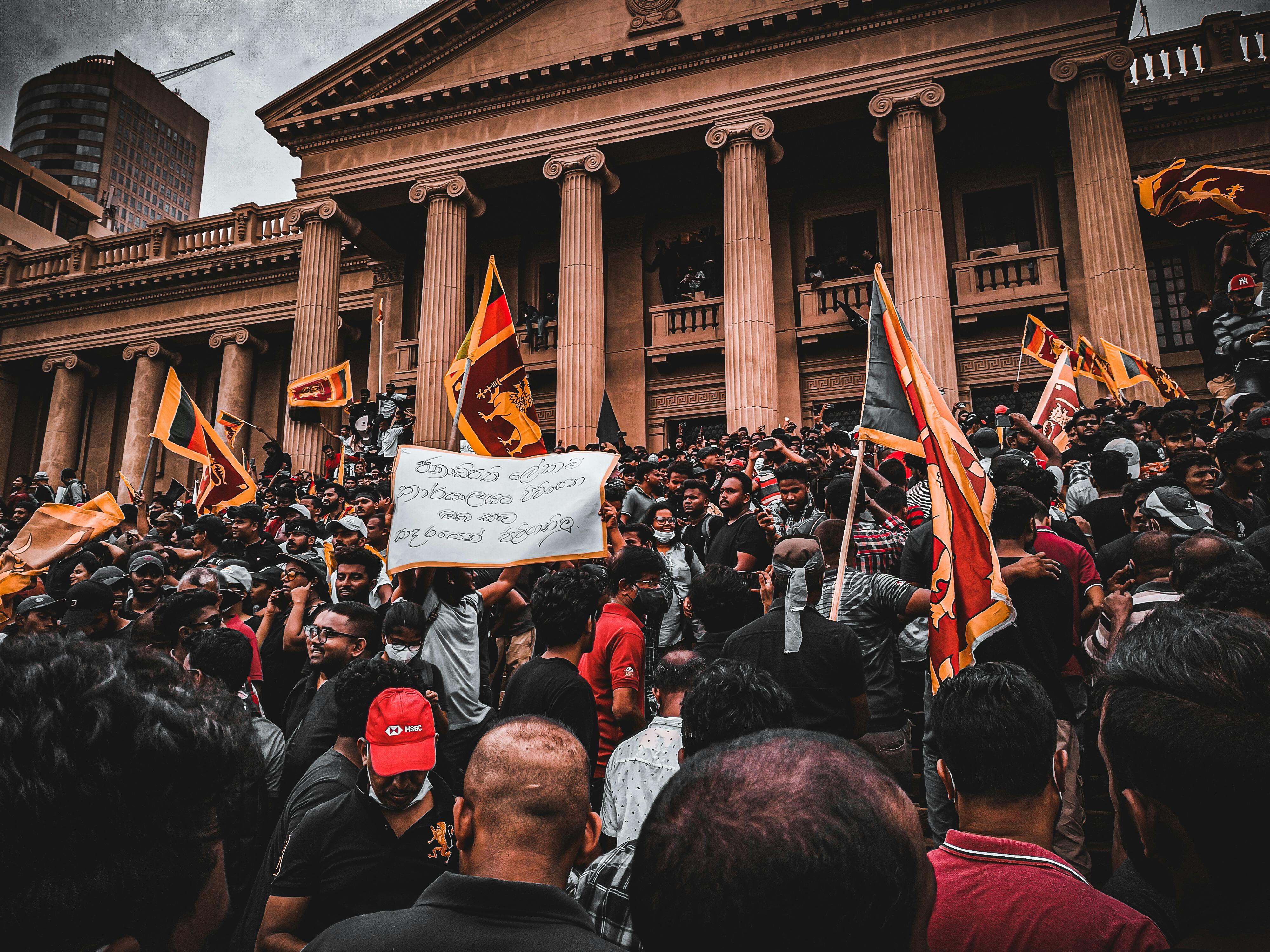
Millions of Americans took to the streets Saturday for the third round of No Kings protests, with demonstrations spreading across every congressional district in the country and onto six continents as organizers channeled months of frustration with Donald Trump’s administration into one of the largest coordinated protest movements in recent American history.
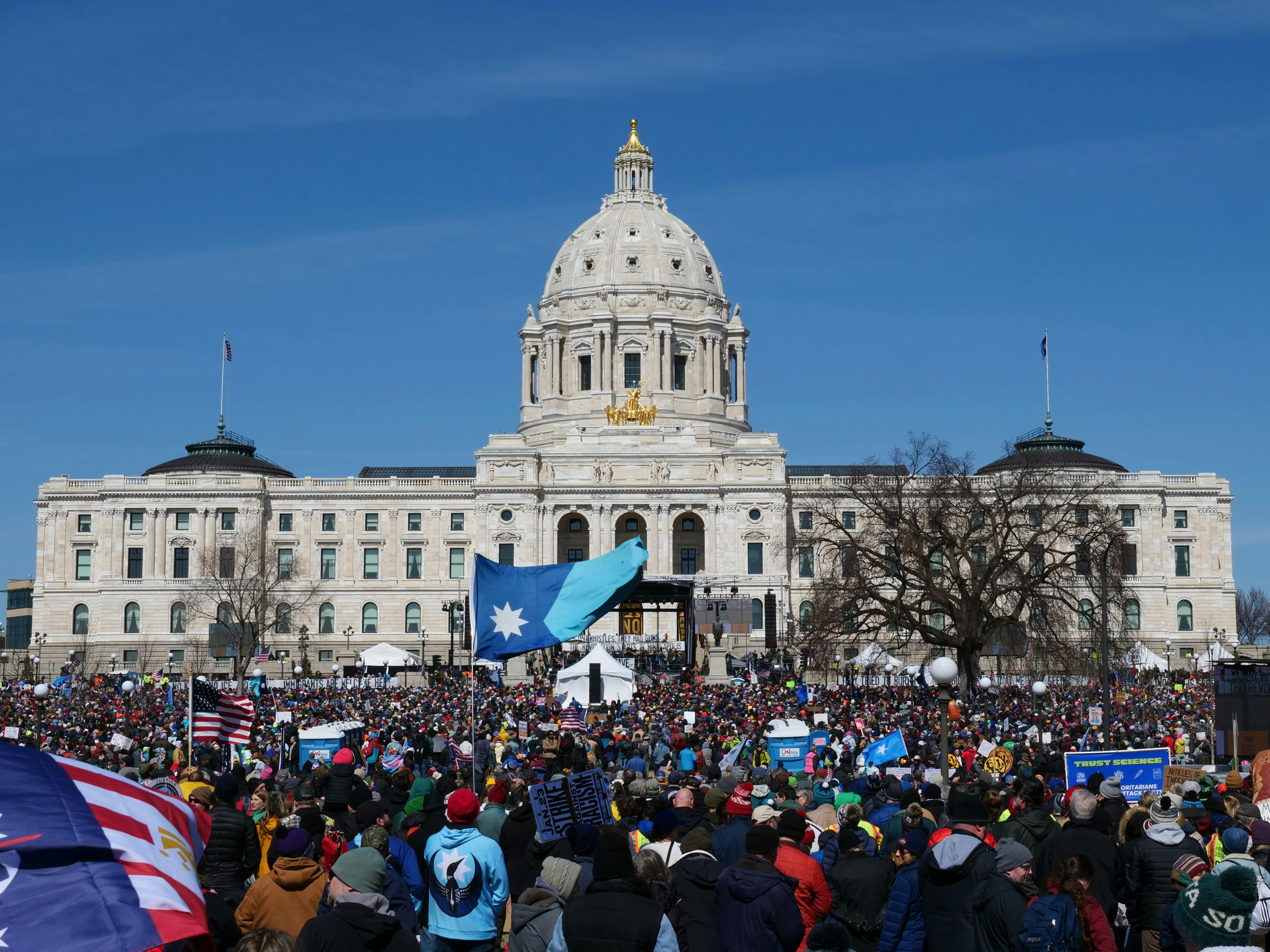
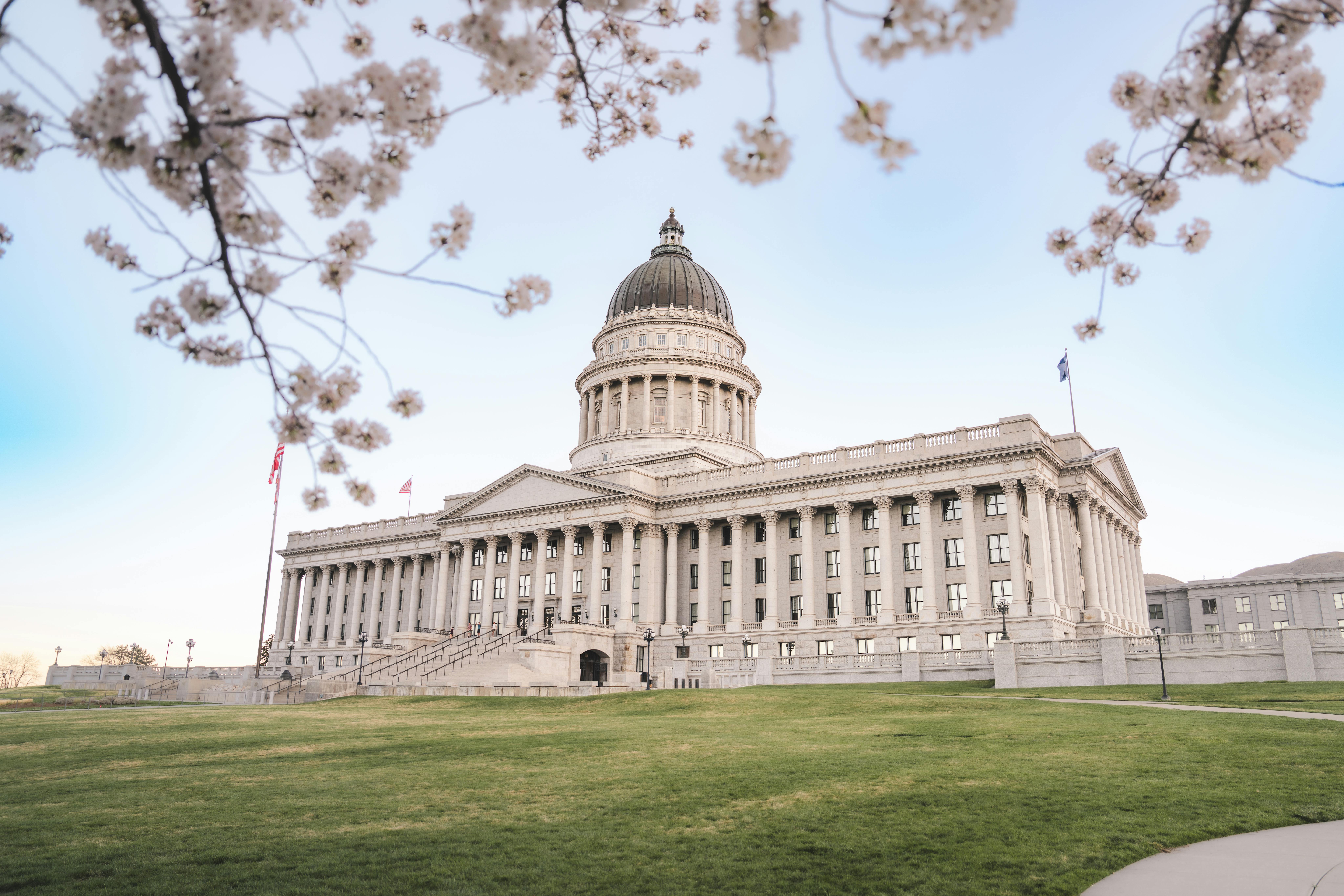
The national flagship event unfolded in St. Paul, Minnesota, where tens of thousands packed the area around the state Capitol. Streets clogged more than a mile out, buses ran standing-room-only, and parking disappeared early as crowds dressed in layers against the spring chill carried handmade signs reading “No War” and “1776.” The energy in St. Paul carried particular weight given what happened there in recent months. Federal immigration enforcement operations in Minneapolis turned deadly twice this year. On January 7, an Immigration and Customs Enforcement officer fatally shot Renee Good, a 37-year-old mother and U.S. citizen. Less than three weeks later, Customs and Border Patrol agents killed Alex Pretti, also 37 and also a U.S. citizen. Both deaths fueled the anger that filled the streets Saturday.
Bruce Springsteen performed at the St. Paul event, debuting his new song “Streets of Minneapolis.” He was joined by Joan Baez, Maggie Rogers, and a roster of political figures that included U.S. Sen. Bernie Sanders of Vermont, Minnesota Gov. Tim Walz, U.S. Rep. Ilhan Omar, and actress and activist Jane Fonda.
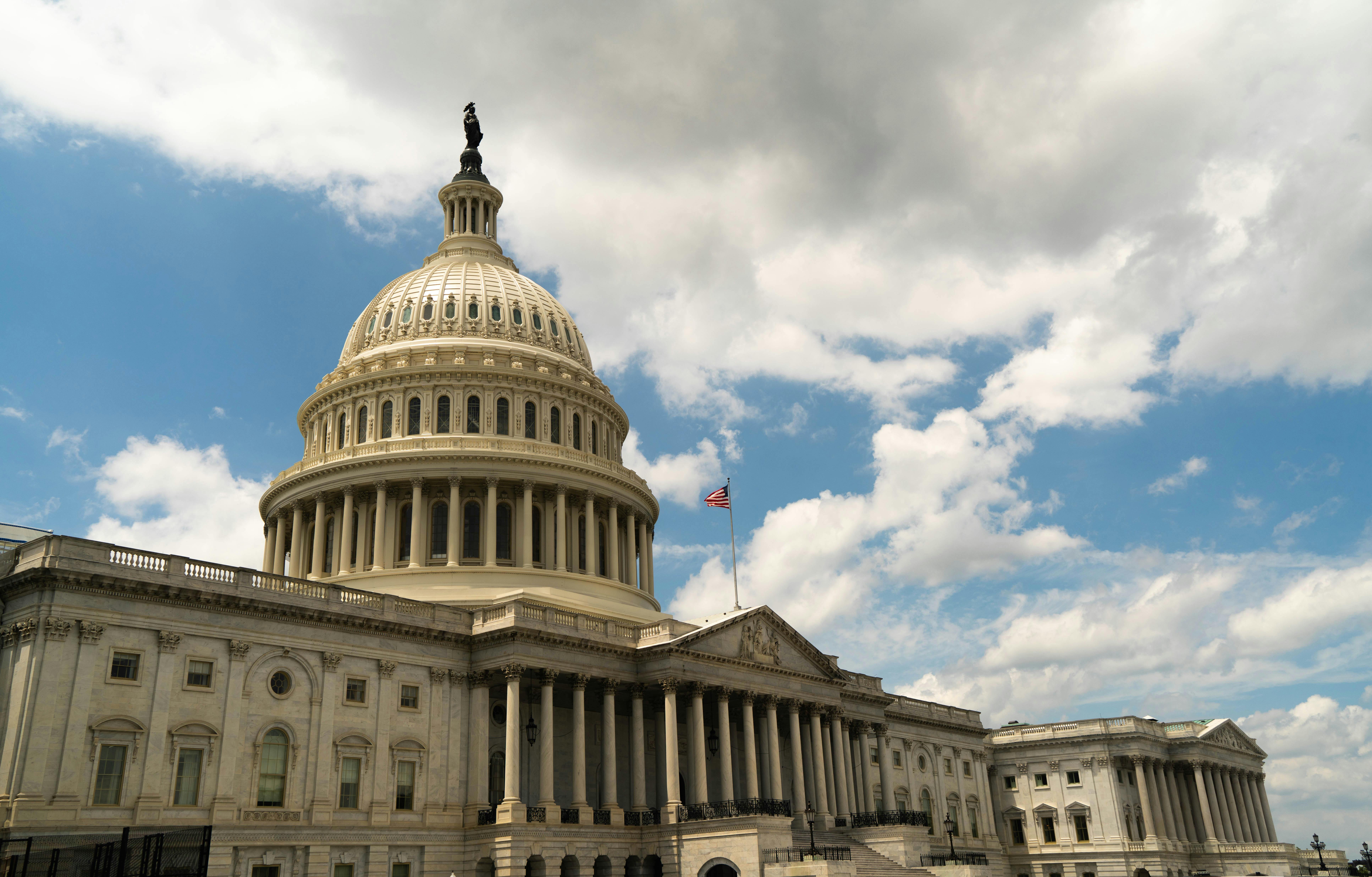
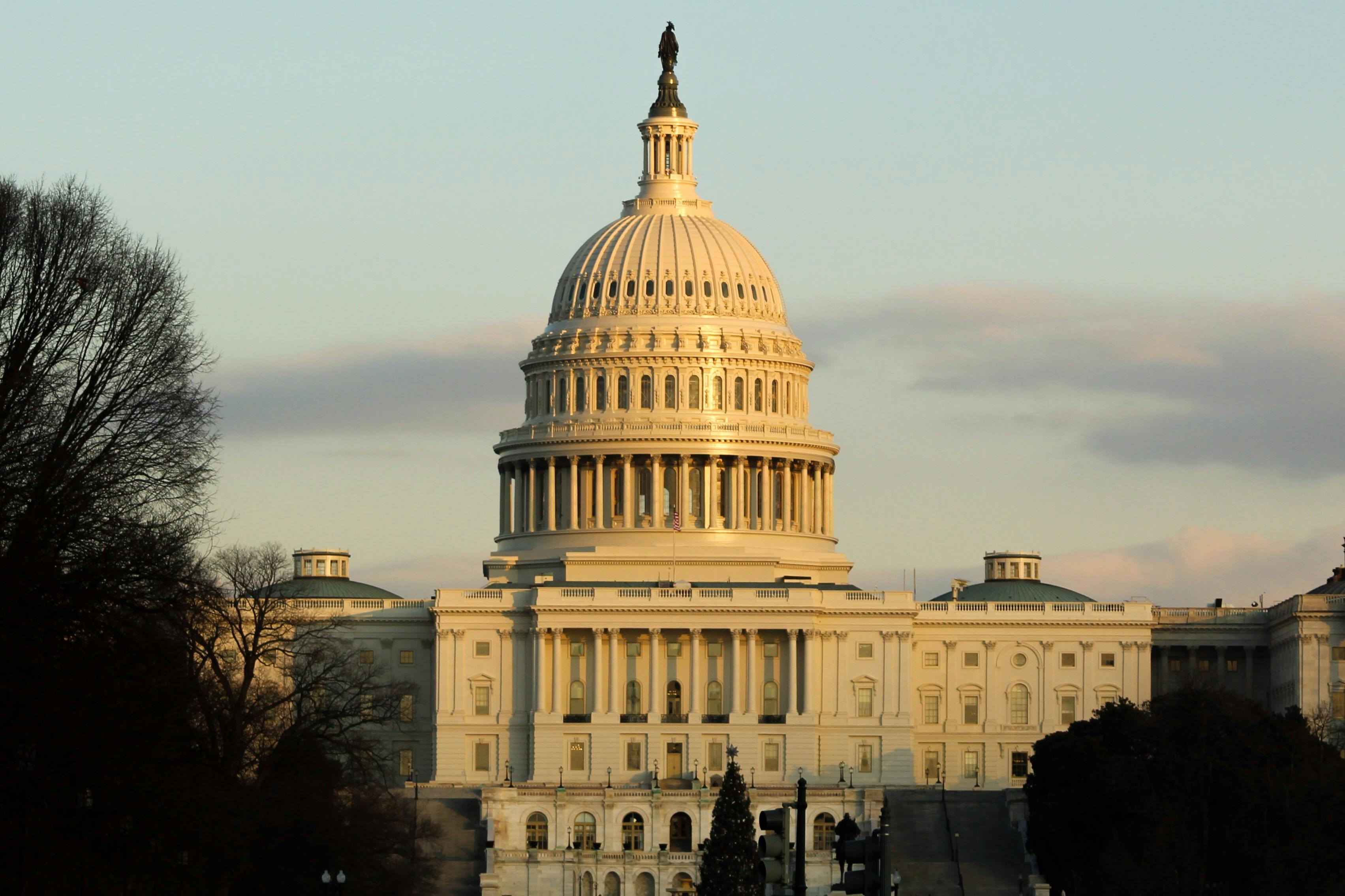
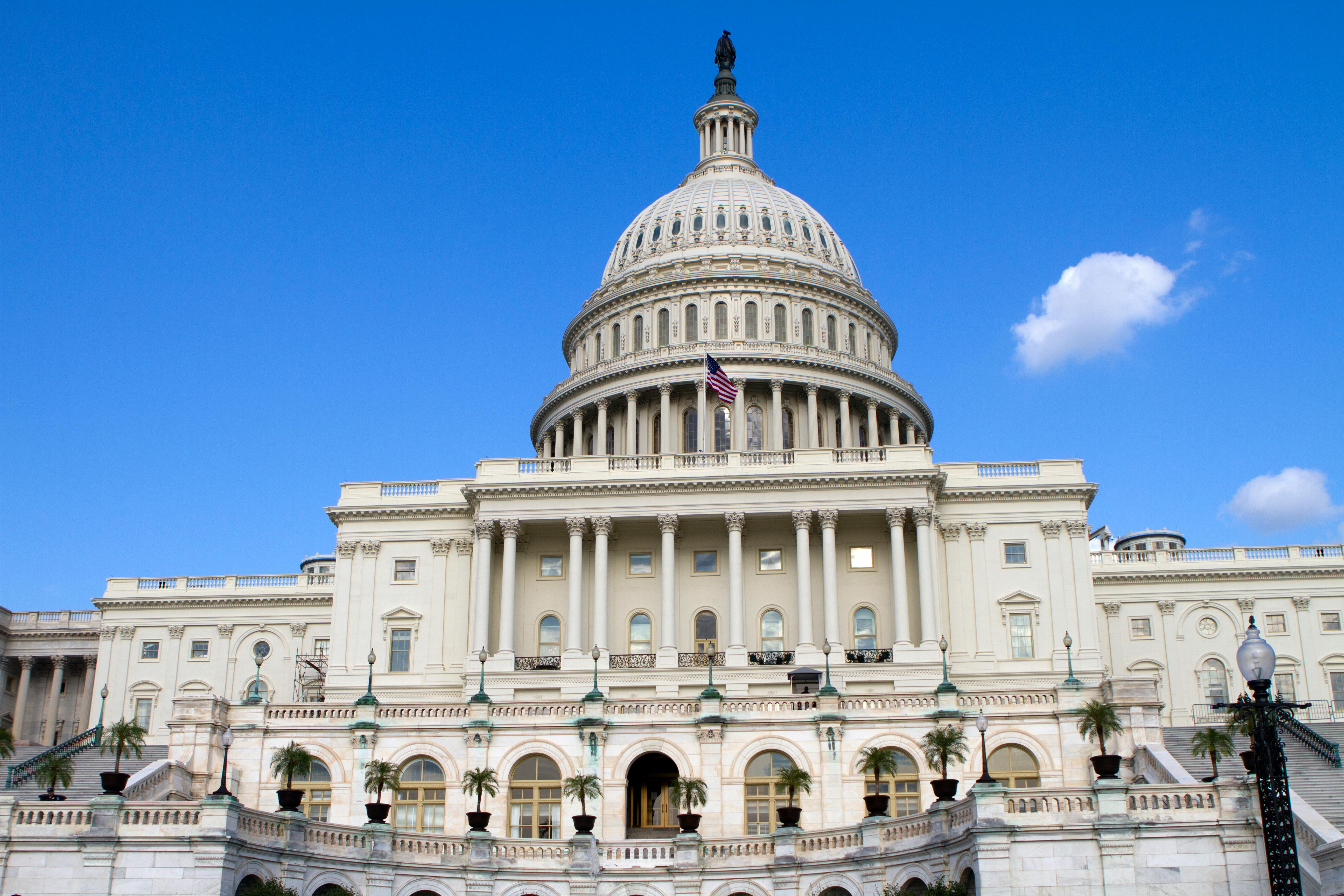
In Washington, D.C., the day began at Memorial Circle below Arlington National Cemetery, where thousands carrying signs and playing music gathered before crossing Arlington Memorial Bridge into the city. The crowd around the Lincoln Memorial Reflecting Pool had grown dense by late morning. By late afternoon, hundreds had shifted to the National Mall near the Capitol for a separate Remove the Regime rally, where speakers including former U.S. Capitol Police Officer Harry Dunn called on Congress to move toward impeachment. Dunn, who was on duty during the January 6, 2021 riot, is now running for Congress in Maryland this cycle.
Logan Keith, a No Kings day organizer and national communications coordinator for the advocacy group 50501, said organizers anticipated more than 3,000 demonstrations across the country. The previous national No Kings demonstration in October drew millions to the streets. Saturday’s protests were expected to match or exceed that turnout.
Durham, North Carolina saw several thousand demonstrators flood downtown streets, waving American flags, Ukrainian flags, and, in at least one striking image, a Soviet-style banner bearing Trump’s face.
The scale of the organizing reflects a protest infrastructure that has built steadily since the early months of Trump’s second term. Demonstrations rolled out in every state, including plenty of red states where public dissent tends to carry a higher social cost. The movement draws no single organization at its center. Instead, it functions as a coalition effort with 50501 playing a coordinating role nationally.
From a New Jersey standpoint, this is a story worth watching closely. Bergen County residents showed up in Washington and at regional rallies. The ICE enforcement surge that has defined so much of the Trump administration’s second term has hit North Jersey communities hard, and the deaths in Minneapolis are not abstract to people here. Immigrant families across Hudson and Passaic counties are living with the same fears that turned Minneapolis into a flashpoint.
The No Kings framing is deliberate. Organizers have consistently rejected the language of normal partisan opposition and instead frame the movement around constitutional limits on executive power. Whether that framing builds a broader coalition or stays confined to the existing Democratic base is the organizing question the movement has not yet answered.
What Saturday showed is that the infrastructure for sustained, large-scale protest still exists and still turns people out. Three rounds of national demonstrations, millions on the streets, and no sign of the momentum fading. The administration has not shifted course in response to any of it. That gap between protest energy and policy change is where this story gets harder to write and more important to follow.
Get the Ledger in your inbox.
Central Jersey and Shore news, delivered weekly. Free, no spam.